

Home / Products / Anchors & Anchor Chain Systems
ANCHORS & ANCHOR CHAIN SYSTEMS
AC-14 High Holding Power Anchor
Marine product supply for vessel, offshore, shipyard and industrial requirements across the UAE & GCC.
Specification SupportType & compatibility
Marine & OffshoreWide applications
UAE & GCCSupply coverage
GLOBAL MARINE SOLUTIONS PARTNER







 01 / 22
Product Overview
AC-14 high-holding-power anchors for approved vessel arrangements
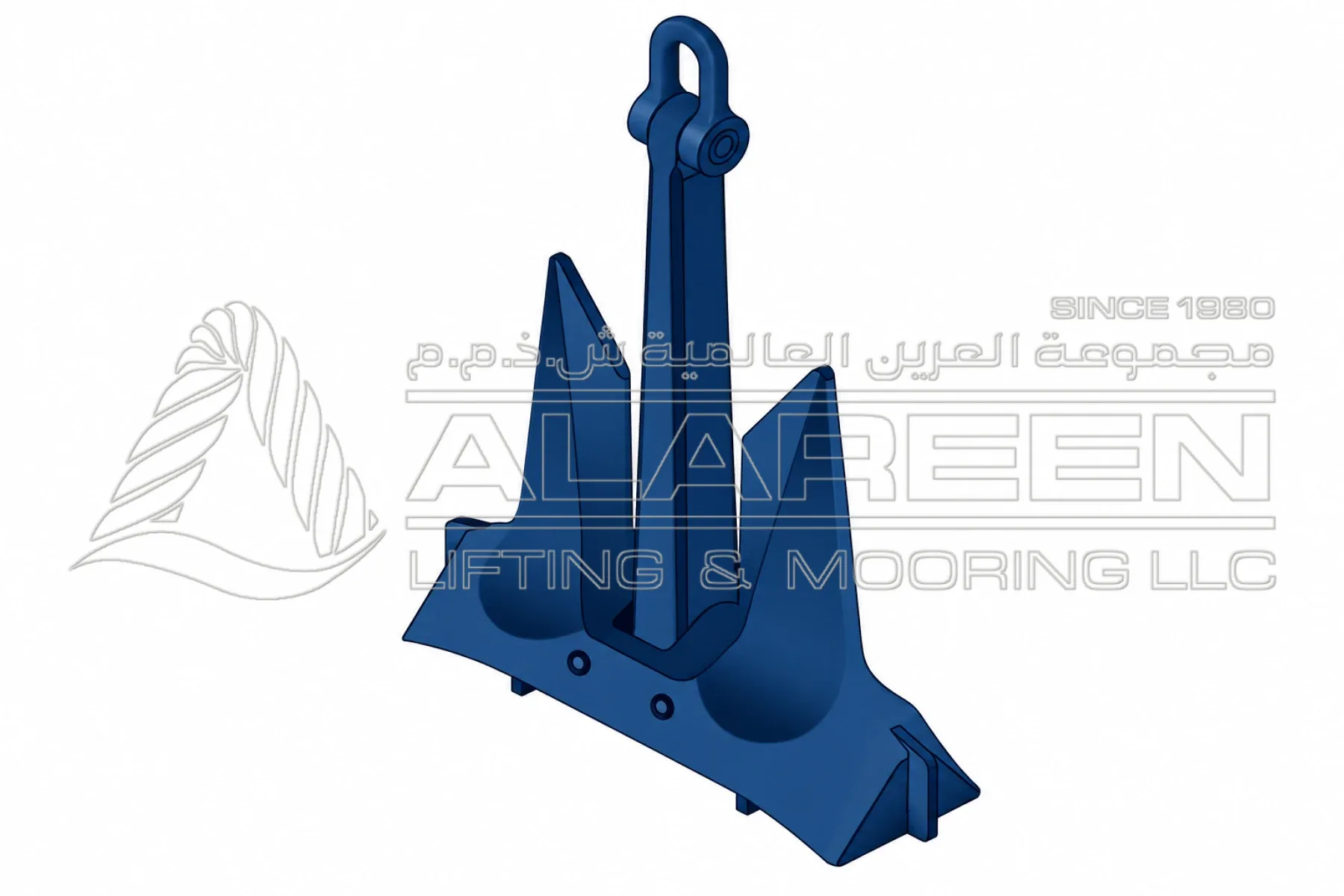
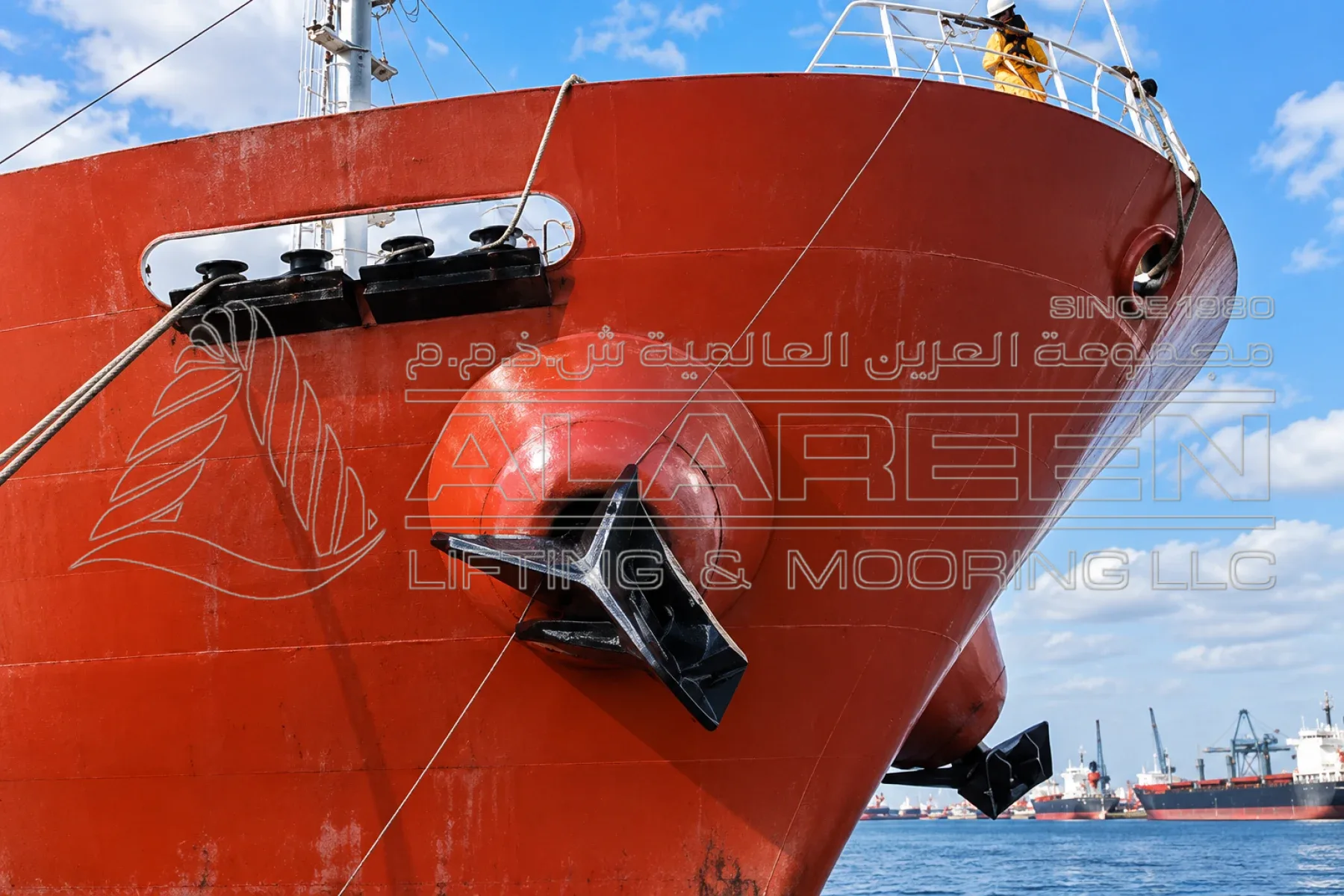
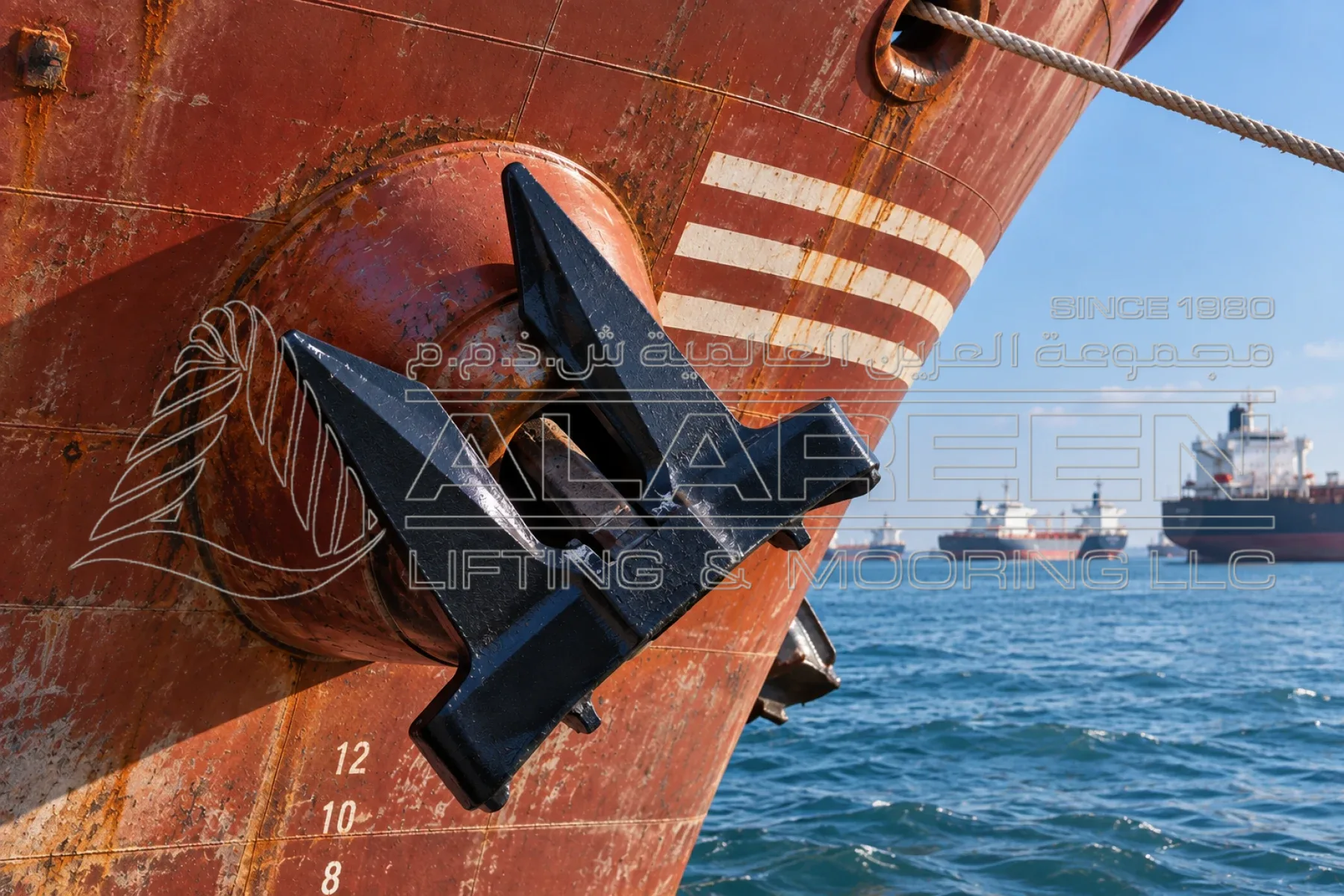
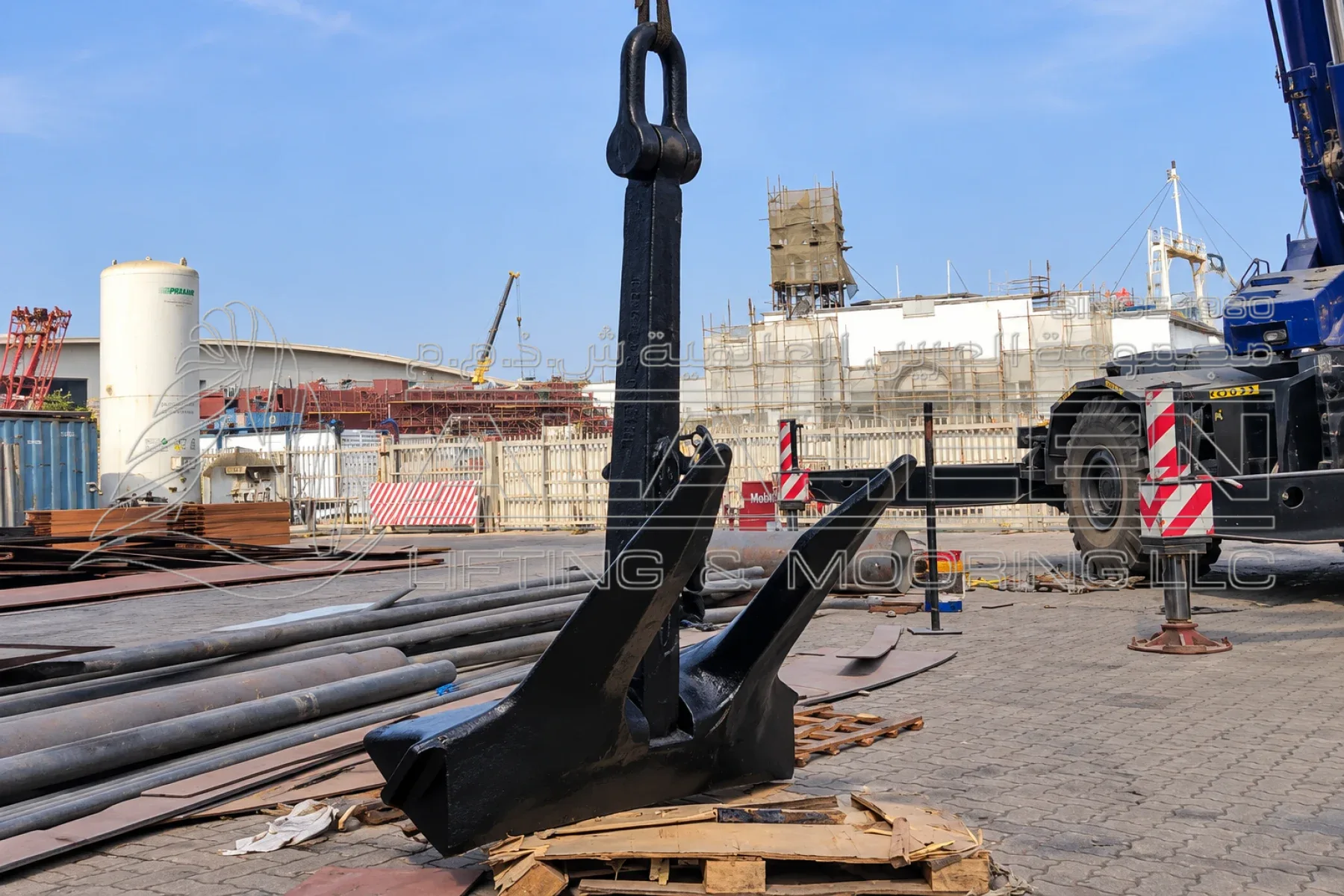
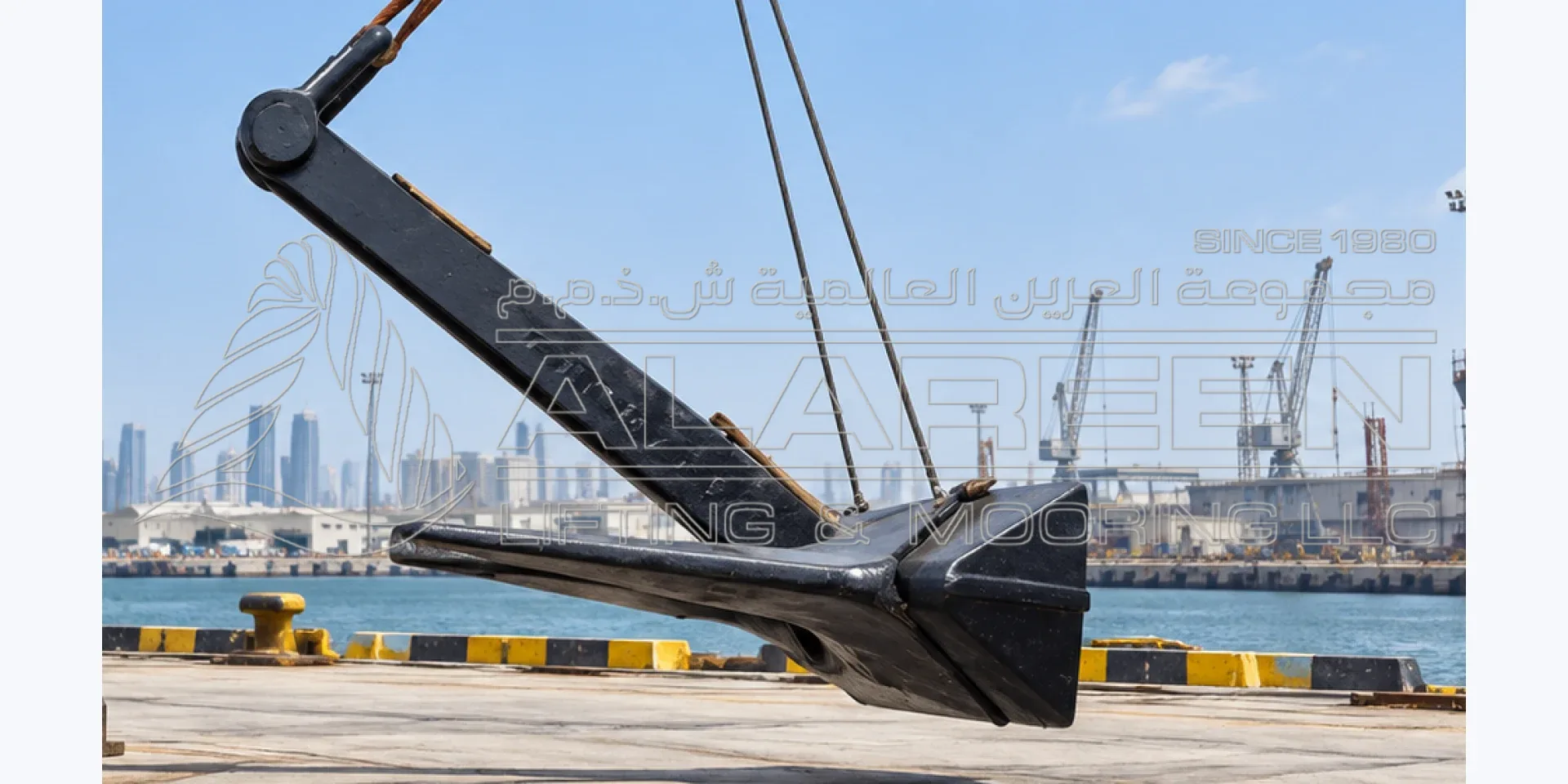
The AC-14 is a stockless anchor design associated with high-holding-power (HHP) ship anchoring. Its shank, crown and fluke geometry differ from conventional Hall or Spek patterns. Al Areen Lifting & Mooring LLC is a UAE trader, supplier and stockist handling vessel-specific AC-14 anchor enquiries. The HHP designation for a purchase must be supported by the approval and records applicable to the actual design and item, not inferred solely from the product name or appearance.
Design, load path and vessel fit
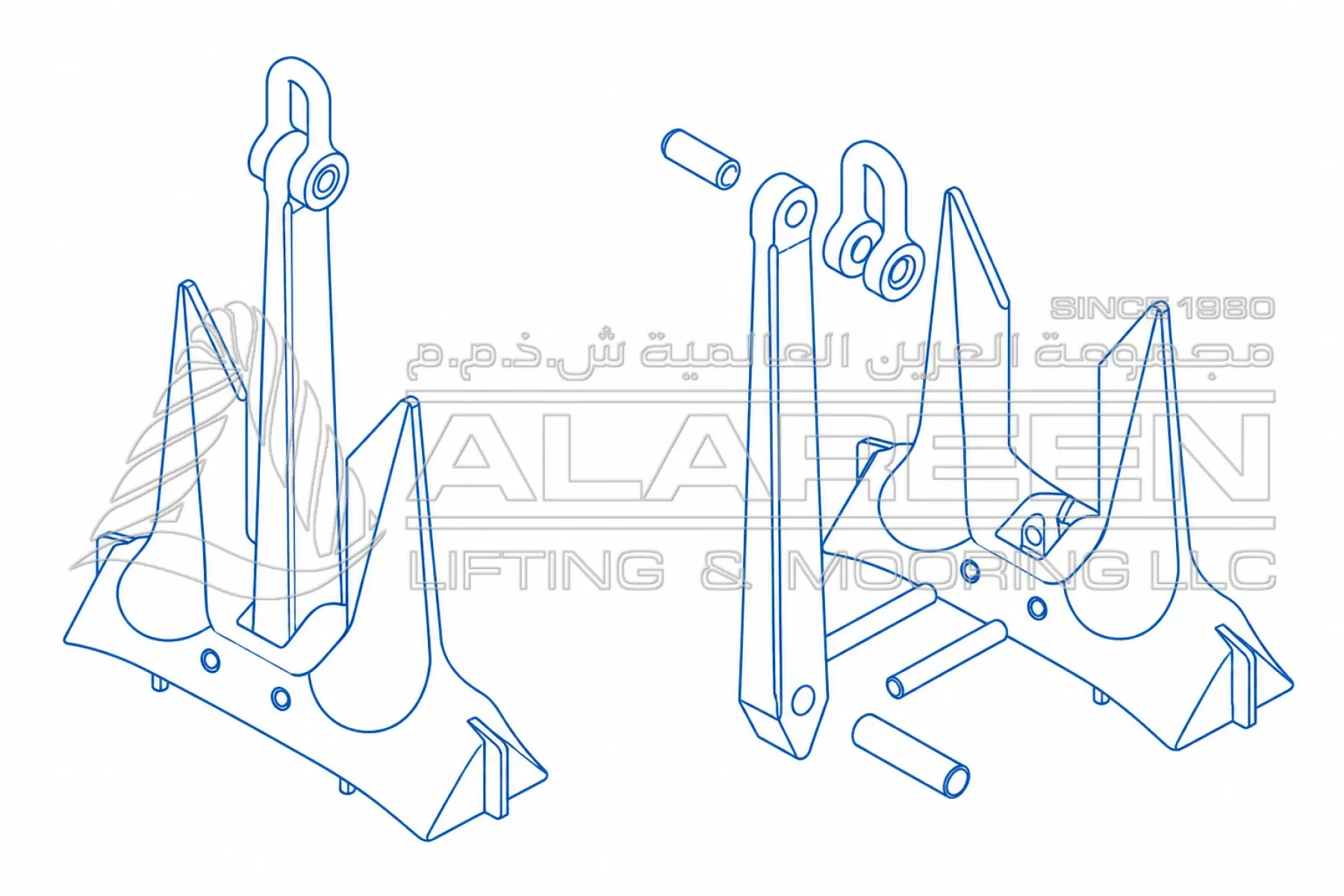
Chain tension reaches the anchor through the end connection and shank, then transfers through the head and flukes to the seabed. Deployment, fluke engagement and recovery depend on the vessel arrangement and operating conditions. For a replacement, compare the offered shank profile, eye, head/fluke envelope, articulation and stowage dimensions with the approved bow drawing. Check clearance through the hawsepipe and seating in the pocket as well as the nominal anchor mass.
HHP selection is a documented engineering decision
Classification rules distinguish HHP anchors from ordinary stockless anchors and set conditions for their use as bower anchors. An AC-14 pattern in a supplier catalogue does not establish that every available item carries the required approval, certificate or permitted mass substitution for a particular vessel. Begin with the vessel's approved equipment schedule, class/flag or owner requirements and original anchor data. A Hall, Spek or other design should not be substituted for AC-14 without a documented engineering review and any required survey approval.
Chain, shackles and connected equipment
Specify the stud-link anchor-chain diameter and grade, end-link dimensions, anchor shackle, pin and any swivel/forerunner arrangement. Verify the eye, jaw, pin retention and articulation against the approved assembly. The windlass, stopper, hawsepipe and pocket are connected selection constraints; a chain fitting of the same nominal size may still have an unsuitable interface.
Use cases and procurement documents
AC-14 enquiries commonly arise for approved commercial-vessel bower-anchor replacement, drydock work, newbuild procurement and planned fleet spares. Shipowners, managers and yards should send the approved type, mass, drawing, vessel identification, chain-end details and required inspection, proof-test or class documents. Compare the delivered markings, condition and dimensions against those records before installation. Use an approved handling plan for the actual mass and moving parts, and resolve any structural repair or alteration through the relevant engineering and survey process.
Request an AC-14 quotation
- Vessel technical reference and approved AC-14 design, nominal mass and port/starboard position.
- Original anchor drawing, identification and pocket/hawse dimensions; photographs supplement drawings.
- Chain, end-link, shackle and any swivel/forerunner interface drawings.
- Required condition, finish, material, item-specific testing and certification documents.
- Quantity, receiving location and requested commercial schedule.
UAE & GCC Maritime Supply Coverage
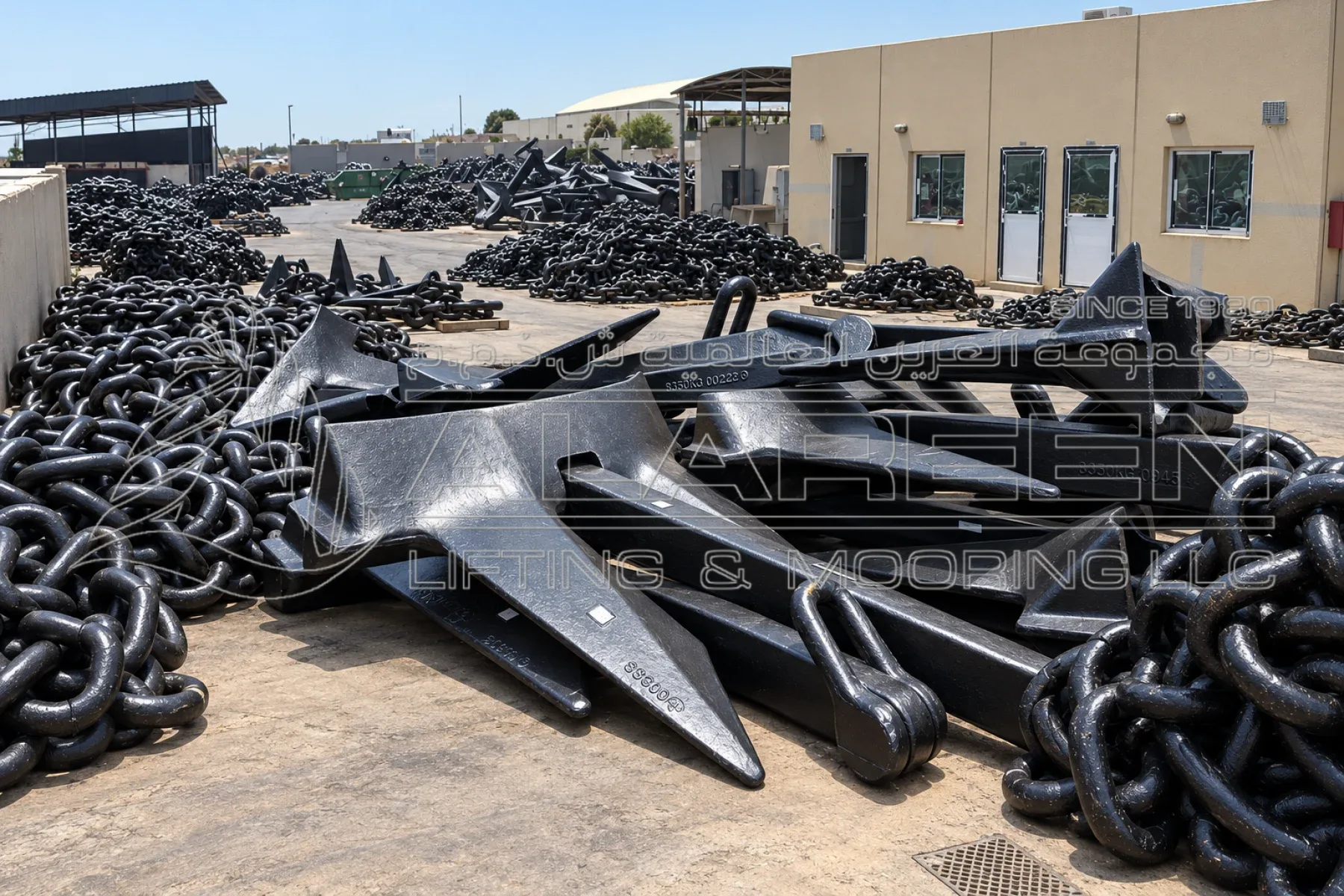
Al Areen supports specification-led AC-14 anchor supply enquiries associated with vessels and customers at Port of Fujairah and Khor Fakkan Port on the UAE East Coast. For Abu Dhabi operations, buyers around Mussafah Port and Khalifa Port can send vessel drawings and chain-connection requirements for replacement or planned procurement. In Dubai, Port Rashid (Mina Rashid) enquiries may involve vessel maintenance, while Dubai Maritime City and Drydocks World Dubai are relevant to ship-repair and drydock purchasing. Hamriyah Port in Sharjah is another context for commercial-vessel and marine-contractor enquiries.
Regional buyers working around Port of Duqm in Oman and Khalifa Bin Salman Port in Bahrain can submit the same vessel-specific specification and documentation requirements. Al Areen also receives enquiries across the wider UAE and from Saudi Arabia, Oman, Qatar, Bahrain and Kuwait. Include the actual receiving location and requested schedule in the RFQ so the offered item and logistics can be confirmed.
Technical Specifications
Request DatasheetAC-14 anchor specification and RFQ checks
| Parameter | Buyer specification and review |
|---|---|
| Approved design/HHP basis | Identify the exact AC-14 drawing and evidence required by the vessel's society or owner; a generic catalogue label is insufficient. |
| Nominal anchor mass | Use the vessel's approved equipment schedule and any permitted substitution requirements. |
| Geometry and fit | Compare shank, crown/flukes, eye, articulation, hawse clearance and anchor-pocket seating. |
| Chain and connection | Specify chain diameter/grade, end link, anchor shackle, pin/retention and any approved swivel or forerunner. |
| Material and finish | Specify item-specific material, manufacturing route and coating requirements from the purchase documents. |
| Inspection and tests | Identify applicable proof-test, NDE, marking and survey requirements before quotation; check the resulting records for the exact anchor. |
| Commercial/receiving | State quantity, condition, destination, lifting/transport scope, customs documents and requested timing. |
Review before fitting
- Check vessel-approved anchor type, mass and documentation basis.
- Compare the proposed drawing with the original and bow stowage envelope.
- Verify chain-end connection and retention details.
- Match item markings to test and inspection records.
- Install and trial the recovery/seating sequence under the vessel or yard procedure.
IACS UR A1 distinguishes ordinary stockless and HHP anchoring-equipment categories; UR W29 addresses manufacture, testing, marking and certification within its scope. Their relevance depends on the vessel's applicable class rules and the actual offered item. No universal mass, grade, test load or certificate is assigned here.
Applications Across Industry
FAQ
What is an AC-14 anchor?+
It is a stockless ship-anchor design associated with high-holding-power bower anchoring. The exact supplied design and its approval documents must match the vessel requirement.
What does HHP mean for AC-14 procurement?+
HHP is a classification category with a defined holding-power basis and conditions for ship use. The offered item needs the appropriate approval evidence for the applicable vessel requirement.
Is every anchor labelled AC-14 automatically class approved?+
No. Ask for the approved design and item-specific documents required by the vessel, and match the physical anchor marking to those records.
Can AC-14 always be lighter than a Hall anchor?+
Do not apply a generic mass reduction. Any substitution is controlled by the vessel equipment schedule and the applicable class/owner approval.
How does AC-14 differ from Hall and Spek?+
They are separate anchor patterns with different head/fluke and stowage geometry. The approved drawing, class basis and vessel fit decide selection.
What are the defining AC-14 parts?+
Review the shank and connection eye, crown/head, flukes, pivot or articulation and the maker-specific dimensions on the proposed drawing.
Can a different HHP anchor replace AC-14?+
Only after engineering and any required class/survey review confirm the type, approved holding category, mass, bow fit, chain interface and documents.
Does an HHP label guarantee the same holding force on every seabed?+
No. Approval category and site performance are different. Seabed, chain scope, deployment and environmental loading affect actual holding.
What is the most common AC-14 replacement mistake?+
Ordering by nominal mass and name without comparing the approved drawing, anchor-pocket envelope and chain-end connection.
Is AC-14 a general-purpose lifting point?+
No. It is an anchor within a vessel anchoring system and should not be used to suspend unrelated loads.
Which vessel documents should accompany a AC-14 anchor enquiry?+
Send the approved anchoring-equipment schedule or drawing, original anchor identification, class or owner specification, and any survey report relevant to the replacement.
Is nominal anchor mass enough to select a replacement?+
No. The exact type, drawing, pocket and hawse clearance, chain-end connection and documentation must also match the approved vessel arrangement.
What chain details should the buyer provide?+
State the stud-link chain diameter and grade, end-link geometry, joining arrangement and drawing so mating components can be checked.
When is a swivel or forerunner needed?+
Only when the vessel-approved chain-end arrangement specifies one. Confirm its interface, orientation, pin retention and documentation with the full assembly.
Which material and finish should be requested?+
State the required material specification and coating or finish from the vessel or purchase documents; confirm the actual offered anchor records before purchase.
What should an item-specific document package include?+
Depending on the purchase specification, request the approved drawing, identification, material records, proof-test/inspection evidence and any class or survey document traceable to the physical item.
Does a catalogue certificate cover every anchor of the same type?+
No. Match the actual anchor marking and identification to the supplied test and inspection documents.
What should be inspected on receipt?+
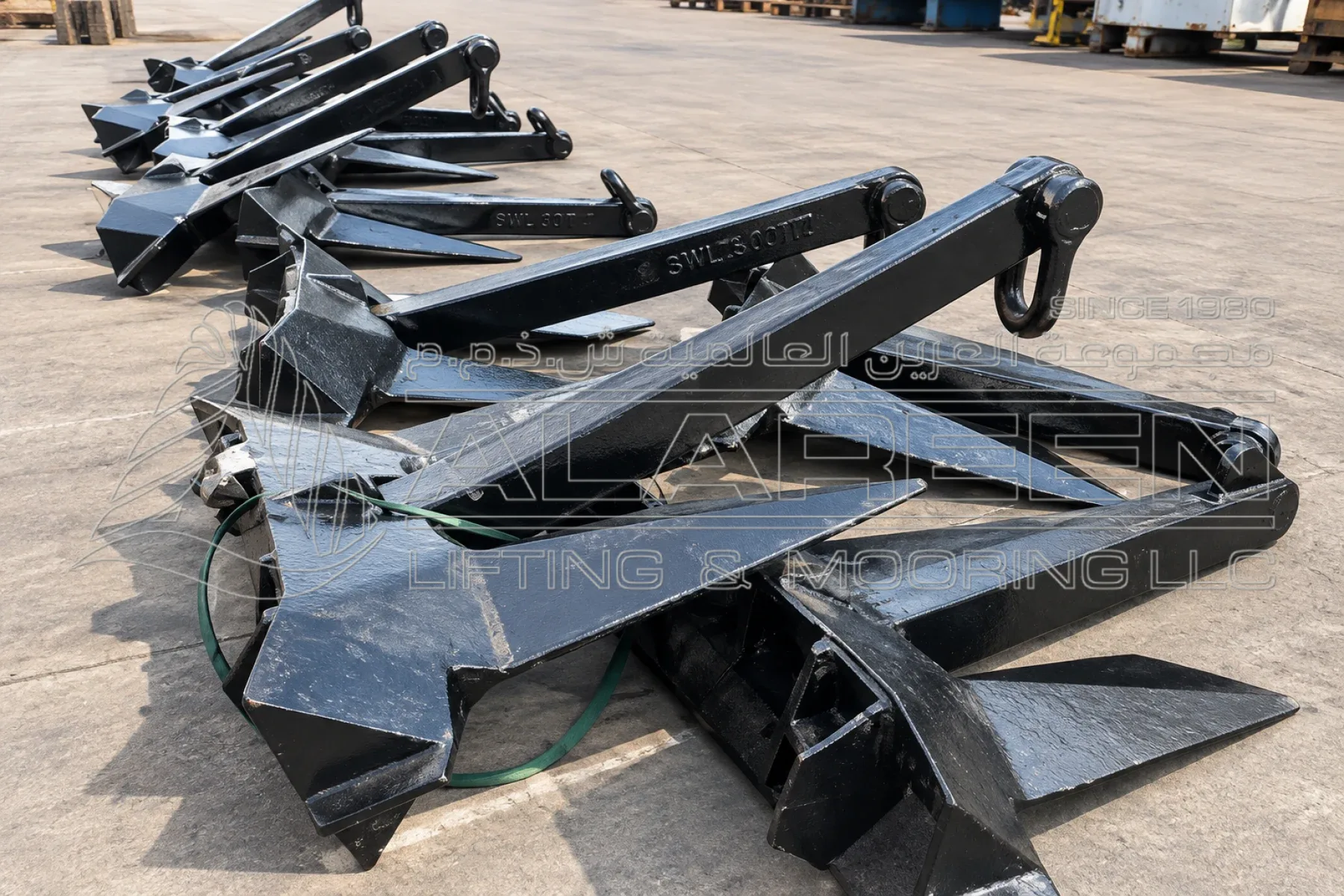
Check markings, dimensions, finish, cracks, deformation, corrosion, the eye and joining interface, and the condition and movement of the head and flukes.
How should a heavy anchor be handled?+
Plan lifting and transport for the actual mass and centre of gravity; restrain the movable head and keep personnel clear of suspended loads and pinch points.
What should be checked during installation?+
Confirm the approved connection and retention, free articulation, hawse travel, pocket seating and securing arrangement using the vessel or yard procedure.
Can an anchor be welded or modified after supply?+
Any structural alteration needs an approved engineering and inspection process and, where applicable, maker/class involvement; it cannot be treated as a routine fit adjustment.
Can this anchor be used as a lifting accessory?+
No. An anchor is part of an anchoring system and should not be used to suspend unrelated loads.
What affects actual seabed holding?+
Seabed, deployment, chain scope, direction of pull, environmental loading and the complete anchoring arrangement affect performance; a universal site holding figure cannot be inferred from the name.
What is needed for a drydock replacement quote?+
Send the vessel identity, failed-item report, approved design and mass, drawings or measurements, chain connection, documentary requirements, receiving point and required schedule.
Can Al Areen supply chain and connection fittings with an anchor enquiry?+
Yes, buyers can submit the complete package for sourcing review. The proposed anchor, chain, shackle and any swivel or forerunner must be verified together.
How is stock availability confirmed?+
Al Areen provides Stock Availability support; the exact pattern, mass, condition and documents available for an order are confirmed in the item-specific quotation.
What does Fast UAE & GCC Delivery mean for this item?+
It is a company-wide service assurance. The actual destination, customs/receiving requirements and item-specific schedule are confirmed with the quotation.
Can I seek support outside normal office hours?+
Al Areen states 24/7 Customer Support. Send the vessel, item and destination details so the relevant team can respond to the enquiry.
Can buyers near Port of Fujairah or Khor Fakkan Port enquire?+
Yes. Provide the vessel specification and receiving location for an East Coast supply enquiry; the quotation establishes the item and commercial terms.
What should a Mussafah Port or Khalifa Port buyer send?+
Send the approved vessel anchor and chain details, required documents and Abu Dhabi receiving point for a specific offer.
How can a Port Rashid (Mina Rashid) buyer request replacement equipment?+
Identify the vessel, approved anchor arrangement and receiving instructions for a Dubai-based enquiry.
What should Dubai Maritime City and Drydocks World Dubai repair teams provide?+
Provide the repair scope, item drawings, condition report, chain-end arrangement, survey needs and yard receiving requirements.
Can a Hamriyah Port contractor request anchor and chain components?+
Yes. Identify the vessel or project, exact anchor pattern, mating chain parts and the Sharjah receiving arrangement.
Are enquiries for Port of Duqm in Oman accepted?+
Yes. Include the vessel specification, documentation and import/receiving information for a regional quotation.
Are enquiries for Khalifa Bin Salman Port in Bahrain accepted?+
Yes. Send the anchor type, drawing, connection details, document package and receiving information.
How are enquiries for a listed maritime hub handled?+
Provide the vessel specification, required item, documentation and precise receiving point. The quotation confirms the available item and delivery arrangement.
Product Overview
AC-14 high-holding-power anchors for approved vessel arrangements
The AC-14 is a stockless anchor design associated with high-holding-power (HHP) ship anchoring. Its shank, crown and fluke geometry differ from conventional Hall or Spek patterns. Al Areen Lifting & Mooring LLC is a UAE trader, supplier and stockist handling vessel-specific AC-14 anchor enquiries. The HHP designation for a purchase must be supported by the approval and records applicable to the actual design and item, not inferred solely from the product name or appearance.
Design, load path and vessel fit
Chain tension reaches the anchor through the end connection and shank, then transfers through the head and flukes to the seabed. Deployment, fluke engagement and recovery depend on the vessel arrangement and operating conditions. For a replacement, compare the offered shank profile, eye, head/fluke envelope, articulation and stowage dimensions with the approved bow drawing. Check clearance through the hawsepipe and seating in the pocket as well as the nominal anchor mass.
HHP selection is a documented engineering decision
Classification rules distinguish HHP anchors from ordinary stockless anchors and set conditions for their use as bower anchors. An AC-14 pattern in a supplier catalogue does not establish that every available item carries the required approval, certificate or permitted mass substitution for a particular vessel. Begin with the vessel's approved equipment schedule, class/flag or owner requirements and original anchor data. A Hall, Spek or other design should not be substituted for AC-14 without a documented engineering review and any required survey approval.
Chain, shackles and connected equipment
Specify the stud-link anchor-chain diameter and grade, end-link dimensions, anchor shackle, pin and any swivel/forerunner arrangement. Verify the eye, jaw, pin retention and articulation against the approved assembly. The windlass, stopper, hawsepipe and pocket are connected selection constraints; a chain fitting of the same nominal size may still have an unsuitable interface.
Use cases and procurement documents
AC-14 enquiries commonly arise for approved commercial-vessel bower-anchor replacement, drydock work, newbuild procurement and planned fleet spares. Shipowners, managers and yards should send the approved type, mass, drawing, vessel identification, chain-end details and required inspection, proof-test or class documents. Compare the delivered markings, condition and dimensions against those records before installation. Use an approved handling plan for the actual mass and moving parts, and resolve any structural repair or alteration through the relevant engineering and survey process.
Request an AC-14 quotation
- Vessel technical reference and approved AC-14 design, nominal mass and port/starboard position.
- Original anchor drawing, identification and pocket/hawse dimensions; photographs supplement drawings.
- Chain, end-link, shackle and any swivel/forerunner interface drawings.
- Required condition, finish, material, item-specific testing and certification documents.
- Quantity, receiving location and requested commercial schedule.
UAE & GCC Maritime Supply Coverage
Al Areen supports specification-led AC-14 anchor supply enquiries associated with vessels and customers at Port of Fujairah and Khor Fakkan Port on the UAE East Coast. For Abu Dhabi operations, buyers around Mussafah Port and Khalifa Port can send vessel drawings and chain-connection requirements for replacement or planned procurement. In Dubai, Port Rashid (Mina Rashid) enquiries may involve vessel maintenance, while Dubai Maritime City and Drydocks World Dubai are relevant to ship-repair and drydock purchasing. Hamriyah Port in Sharjah is another context for commercial-vessel and marine-contractor enquiries.
Regional buyers working around Port of Duqm in Oman and Khalifa Bin Salman Port in Bahrain can submit the same vessel-specific specification and documentation requirements. Al Areen also receives enquiries across the wider UAE and from Saudi Arabia, Oman, Qatar, Bahrain and Kuwait. Include the actual receiving location and requested schedule in the RFQ so the offered item and logistics can be confirmed.
01 / 22
Technical Specifications
Request DatasheetAC-14 anchor specification and RFQ checks
| Parameter | Buyer specification and review |
|---|---|
| Approved design/HHP basis | Identify the exact AC-14 drawing and evidence required by the vessel's society or owner; a generic catalogue label is insufficient. |
| Nominal anchor mass | Use the vessel's approved equipment schedule and any permitted substitution requirements. |
| Geometry and fit | Compare shank, crown/flukes, eye, articulation, hawse clearance and anchor-pocket seating. |
| Chain and connection | Specify chain diameter/grade, end link, anchor shackle, pin/retention and any approved swivel or forerunner. |
| Material and finish | Specify item-specific material, manufacturing route and coating requirements from the purchase documents. |
| Inspection and tests | Identify applicable proof-test, NDE, marking and survey requirements before quotation; check the resulting records for the exact anchor. |
| Commercial/receiving | State quantity, condition, destination, lifting/transport scope, customs documents and requested timing. |
Review before fitting
- Check vessel-approved anchor type, mass and documentation basis.
- Compare the proposed drawing with the original and bow stowage envelope.
- Verify chain-end connection and retention details.
- Match item markings to test and inspection records.
- Install and trial the recovery/seating sequence under the vessel or yard procedure.
IACS UR A1 distinguishes ordinary stockless and HHP anchoring-equipment categories; UR W29 addresses manufacture, testing, marking and certification within its scope. Their relevance depends on the vessel's applicable class rules and the actual offered item. No universal mass, grade, test load or certificate is assigned here.
Applications Across Industry
FAQ
What is an AC-14 anchor?+
It is a stockless ship-anchor design associated with high-holding-power bower anchoring. The exact supplied design and its approval documents must match the vessel requirement.
What does HHP mean for AC-14 procurement?+
HHP is a classification category with a defined holding-power basis and conditions for ship use. The offered item needs the appropriate approval evidence for the applicable vessel requirement.
Is every anchor labelled AC-14 automatically class approved?+
No. Ask for the approved design and item-specific documents required by the vessel, and match the physical anchor marking to those records.
Can AC-14 always be lighter than a Hall anchor?+
Do not apply a generic mass reduction. Any substitution is controlled by the vessel equipment schedule and the applicable class/owner approval.
How does AC-14 differ from Hall and Spek?+
They are separate anchor patterns with different head/fluke and stowage geometry. The approved drawing, class basis and vessel fit decide selection.
What are the defining AC-14 parts?+
Review the shank and connection eye, crown/head, flukes, pivot or articulation and the maker-specific dimensions on the proposed drawing.
Can a different HHP anchor replace AC-14?+
Only after engineering and any required class/survey review confirm the type, approved holding category, mass, bow fit, chain interface and documents.
Does an HHP label guarantee the same holding force on every seabed?+
No. Approval category and site performance are different. Seabed, chain scope, deployment and environmental loading affect actual holding.
What is the most common AC-14 replacement mistake?+
Ordering by nominal mass and name without comparing the approved drawing, anchor-pocket envelope and chain-end connection.
Is AC-14 a general-purpose lifting point?+
No. It is an anchor within a vessel anchoring system and should not be used to suspend unrelated loads.
Which vessel documents should accompany a AC-14 anchor enquiry?+
Send the approved anchoring-equipment schedule or drawing, original anchor identification, class or owner specification, and any survey report relevant to the replacement.
Is nominal anchor mass enough to select a replacement?+
No. The exact type, drawing, pocket and hawse clearance, chain-end connection and documentation must also match the approved vessel arrangement.
What chain details should the buyer provide?+
State the stud-link chain diameter and grade, end-link geometry, joining arrangement and drawing so mating components can be checked.
When is a swivel or forerunner needed?+
Only when the vessel-approved chain-end arrangement specifies one. Confirm its interface, orientation, pin retention and documentation with the full assembly.
Which material and finish should be requested?+
State the required material specification and coating or finish from the vessel or purchase documents; confirm the actual offered anchor records before purchase.
What should an item-specific document package include?+
Depending on the purchase specification, request the approved drawing, identification, material records, proof-test/inspection evidence and any class or survey document traceable to the physical item.
Does a catalogue certificate cover every anchor of the same type?+
No. Match the actual anchor marking and identification to the supplied test and inspection documents.
What should be inspected on receipt?+
Check markings, dimensions, finish, cracks, deformation, corrosion, the eye and joining interface, and the condition and movement of the head and flukes.
How should a heavy anchor be handled?+
Plan lifting and transport for the actual mass and centre of gravity; restrain the movable head and keep personnel clear of suspended loads and pinch points.
What should be checked during installation?+
Confirm the approved connection and retention, free articulation, hawse travel, pocket seating and securing arrangement using the vessel or yard procedure.
Can an anchor be welded or modified after supply?+
Any structural alteration needs an approved engineering and inspection process and, where applicable, maker/class involvement; it cannot be treated as a routine fit adjustment.
Can this anchor be used as a lifting accessory?+
No. An anchor is part of an anchoring system and should not be used to suspend unrelated loads.
What affects actual seabed holding?+
Seabed, deployment, chain scope, direction of pull, environmental loading and the complete anchoring arrangement affect performance; a universal site holding figure cannot be inferred from the name.
What is needed for a drydock replacement quote?+
Send the vessel identity, failed-item report, approved design and mass, drawings or measurements, chain connection, documentary requirements, receiving point and required schedule.
Can Al Areen supply chain and connection fittings with an anchor enquiry?+
Yes, buyers can submit the complete package for sourcing review. The proposed anchor, chain, shackle and any swivel or forerunner must be verified together.
How is stock availability confirmed?+
Al Areen provides Stock Availability support; the exact pattern, mass, condition and documents available for an order are confirmed in the item-specific quotation.
What does Fast UAE & GCC Delivery mean for this item?+
It is a company-wide service assurance. The actual destination, customs/receiving requirements and item-specific schedule are confirmed with the quotation.
Can I seek support outside normal office hours?+
Al Areen states 24/7 Customer Support. Send the vessel, item and destination details so the relevant team can respond to the enquiry.
Can buyers near Port of Fujairah or Khor Fakkan Port enquire?+
Yes. Provide the vessel specification and receiving location for an East Coast supply enquiry; the quotation establishes the item and commercial terms.
What should a Mussafah Port or Khalifa Port buyer send?+
Send the approved vessel anchor and chain details, required documents and Abu Dhabi receiving point for a specific offer.
How can a Port Rashid (Mina Rashid) buyer request replacement equipment?+
Identify the vessel, approved anchor arrangement and receiving instructions for a Dubai-based enquiry.
What should Dubai Maritime City and Drydocks World Dubai repair teams provide?+
Provide the repair scope, item drawings, condition report, chain-end arrangement, survey needs and yard receiving requirements.
Can a Hamriyah Port contractor request anchor and chain components?+
Yes. Identify the vessel or project, exact anchor pattern, mating chain parts and the Sharjah receiving arrangement.
Are enquiries for Port of Duqm in Oman accepted?+
Yes. Include the vessel specification, documentation and import/receiving information for a regional quotation.
Are enquiries for Khalifa Bin Salman Port in Bahrain accepted?+
Yes. Send the anchor type, drawing, connection details, document package and receiving information.
How are enquiries for a listed maritime hub handled?+
Provide the vessel specification, required item, documentation and precise receiving point. The quotation confirms the available item and delivery arrangement.
Technical Specifications+
AC-14 anchor specification and RFQ checks
| Parameter | Buyer specification and review |
|---|---|
| Approved design/HHP basis | Identify the exact AC-14 drawing and evidence required by the vessel's society or owner; a generic catalogue label is insufficient. |
| Nominal anchor mass | Use the vessel's approved equipment schedule and any permitted substitution requirements. |
| Geometry and fit | Compare shank, crown/flukes, eye, articulation, hawse clearance and anchor-pocket seating. |
| Chain and connection | Specify chain diameter/grade, end link, anchor shackle, pin/retention and any approved swivel or forerunner. |
| Material and finish | Specify item-specific material, manufacturing route and coating requirements from the purchase documents. |
| Inspection and tests | Identify applicable proof-test, NDE, marking and survey requirements before quotation; check the resulting records for the exact anchor. |
| Commercial/receiving | State quantity, condition, destination, lifting/transport scope, customs documents and requested timing. |
Review before fitting
- Check vessel-approved anchor type, mass and documentation basis.
- Compare the proposed drawing with the original and bow stowage envelope.
- Verify chain-end connection and retention details.
- Match item markings to test and inspection records.
- Install and trial the recovery/seating sequence under the vessel or yard procedure.
IACS UR A1 distinguishes ordinary stockless and HHP anchoring-equipment categories; UR W29 addresses manufacture, testing, marking and certification within its scope. Their relevance depends on the vessel's applicable class rules and the actual offered item. No universal mass, grade, test load or certificate is assigned here.
Applications Across Industry+
FAQ+
What is an AC-14 anchor?+
It is a stockless ship-anchor design associated with high-holding-power bower anchoring. The exact supplied design and its approval documents must match the vessel requirement.
What does HHP mean for AC-14 procurement?+
HHP is a classification category with a defined holding-power basis and conditions for ship use. The offered item needs the appropriate approval evidence for the applicable vessel requirement.
Is every anchor labelled AC-14 automatically class approved?+
No. Ask for the approved design and item-specific documents required by the vessel, and match the physical anchor marking to those records.
Can AC-14 always be lighter than a Hall anchor?+
Do not apply a generic mass reduction. Any substitution is controlled by the vessel equipment schedule and the applicable class/owner approval.
How does AC-14 differ from Hall and Spek?+
They are separate anchor patterns with different head/fluke and stowage geometry. The approved drawing, class basis and vessel fit decide selection.
What are the defining AC-14 parts?+
Review the shank and connection eye, crown/head, flukes, pivot or articulation and the maker-specific dimensions on the proposed drawing.
Can a different HHP anchor replace AC-14?+
Only after engineering and any required class/survey review confirm the type, approved holding category, mass, bow fit, chain interface and documents.
Does an HHP label guarantee the same holding force on every seabed?+
No. Approval category and site performance are different. Seabed, chain scope, deployment and environmental loading affect actual holding.
What is the most common AC-14 replacement mistake?+
Ordering by nominal mass and name without comparing the approved drawing, anchor-pocket envelope and chain-end connection.
Is AC-14 a general-purpose lifting point?+
No. It is an anchor within a vessel anchoring system and should not be used to suspend unrelated loads.
Which vessel documents should accompany a AC-14 anchor enquiry?+
Send the approved anchoring-equipment schedule or drawing, original anchor identification, class or owner specification, and any survey report relevant to the replacement.
Is nominal anchor mass enough to select a replacement?+
No. The exact type, drawing, pocket and hawse clearance, chain-end connection and documentation must also match the approved vessel arrangement.
What chain details should the buyer provide?+
State the stud-link chain diameter and grade, end-link geometry, joining arrangement and drawing so mating components can be checked.
When is a swivel or forerunner needed?+
Only when the vessel-approved chain-end arrangement specifies one. Confirm its interface, orientation, pin retention and documentation with the full assembly.
Which material and finish should be requested?+
State the required material specification and coating or finish from the vessel or purchase documents; confirm the actual offered anchor records before purchase.
What should an item-specific document package include?+
Depending on the purchase specification, request the approved drawing, identification, material records, proof-test/inspection evidence and any class or survey document traceable to the physical item.
Does a catalogue certificate cover every anchor of the same type?+
No. Match the actual anchor marking and identification to the supplied test and inspection documents.
What should be inspected on receipt?+
Check markings, dimensions, finish, cracks, deformation, corrosion, the eye and joining interface, and the condition and movement of the head and flukes.
How should a heavy anchor be handled?+
Plan lifting and transport for the actual mass and centre of gravity; restrain the movable head and keep personnel clear of suspended loads and pinch points.
What should be checked during installation?+
Confirm the approved connection and retention, free articulation, hawse travel, pocket seating and securing arrangement using the vessel or yard procedure.
Can an anchor be welded or modified after supply?+
Any structural alteration needs an approved engineering and inspection process and, where applicable, maker/class involvement; it cannot be treated as a routine fit adjustment.
Can this anchor be used as a lifting accessory?+
No. An anchor is part of an anchoring system and should not be used to suspend unrelated loads.
What affects actual seabed holding?+
Seabed, deployment, chain scope, direction of pull, environmental loading and the complete anchoring arrangement affect performance; a universal site holding figure cannot be inferred from the name.
What is needed for a drydock replacement quote?+
Send the vessel identity, failed-item report, approved design and mass, drawings or measurements, chain connection, documentary requirements, receiving point and required schedule.
Can Al Areen supply chain and connection fittings with an anchor enquiry?+
Yes, buyers can submit the complete package for sourcing review. The proposed anchor, chain, shackle and any swivel or forerunner must be verified together.
How is stock availability confirmed?+
Al Areen provides Stock Availability support; the exact pattern, mass, condition and documents available for an order are confirmed in the item-specific quotation.
What does Fast UAE & GCC Delivery mean for this item?+
It is a company-wide service assurance. The actual destination, customs/receiving requirements and item-specific schedule are confirmed with the quotation.
Can I seek support outside normal office hours?+
Al Areen states 24/7 Customer Support. Send the vessel, item and destination details so the relevant team can respond to the enquiry.
Can buyers near Port of Fujairah or Khor Fakkan Port enquire?+
Yes. Provide the vessel specification and receiving location for an East Coast supply enquiry; the quotation establishes the item and commercial terms.
What should a Mussafah Port or Khalifa Port buyer send?+
Send the approved vessel anchor and chain details, required documents and Abu Dhabi receiving point for a specific offer.
How can a Port Rashid (Mina Rashid) buyer request replacement equipment?+
Identify the vessel, approved anchor arrangement and receiving instructions for a Dubai-based enquiry.
What should Dubai Maritime City and Drydocks World Dubai repair teams provide?+
Provide the repair scope, item drawings, condition report, chain-end arrangement, survey needs and yard receiving requirements.
Can a Hamriyah Port contractor request anchor and chain components?+
Yes. Identify the vessel or project, exact anchor pattern, mating chain parts and the Sharjah receiving arrangement.
Are enquiries for Port of Duqm in Oman accepted?+
Yes. Include the vessel specification, documentation and import/receiving information for a regional quotation.
Are enquiries for Khalifa Bin Salman Port in Bahrain accepted?+
Yes. Send the anchor type, drawing, connection details, document package and receiving information.
How are enquiries for a listed maritime hub handled?+
Provide the vessel specification, required item, documentation and precise receiving point. The quotation confirms the available item and delivery arrangement.
Need help selecting the right product?
Our team will help you choose the best solution for your application.