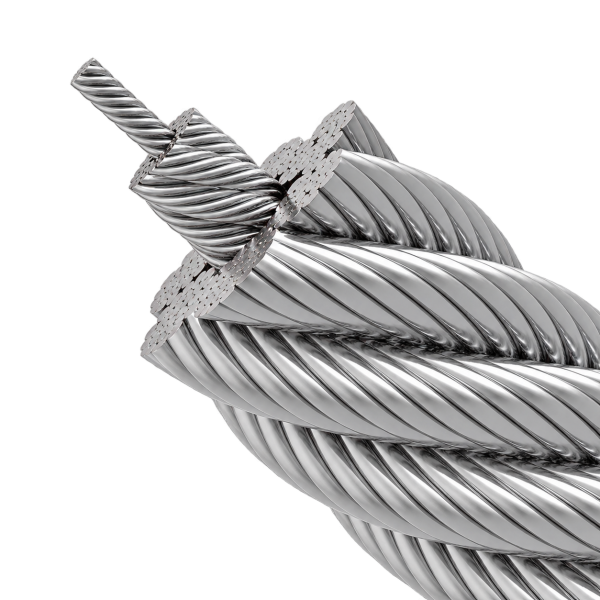
6×26 IWRC
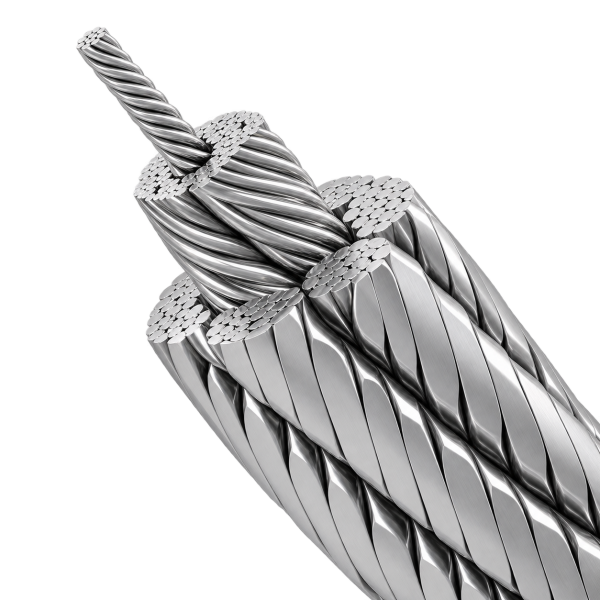

 Get Quote
Home / Products / Steel Wire Ropes & Assemblies
STEEL WIRE ROPES & ASSEMBLIES
Marine product supply for vessel, offshore, shipyard and industrial requirements across the UAE & GCC.
GLOBAL MARINE SOLUTIONS PARTNER
A steel wire rope combines wires into strands and strands around a core. Its construction affects bending behaviour, contact with sheaves and drums, susceptibility to crushing and the way it reacts to load and rotation. Select a replacement from the complete rope designation and equipment requirements, rather than diameter or a broad construction class alone.
Al Areen Lifting & Mooring LLC is a UAE/GCC trader, Leading Supplier, Certified Supplier and Largest Stockist of Standard Wire Ropes. As a No.1 Supplier, we support Best Quality sourcing for technically matched rope requirements.
Steel-rope-core enquiries include 6×36 IWRC, 6×41 IWRC, 6×37 Standard Wire Ropes — IWRC, 6×25 IWRC, 6×25FW IWRC, 6×26 IWRC and 6×52 IWRC. The range of enquiry descriptions also includes 6×19 WSC, plain 6×19 and 8×26; specify the missing core and strand details for the latter two.
A 6×19-class rope is not necessarily a literal six-strand rope with nineteen wires in each strand: filler-wire and Warrington–Seale constructions can be sold within that class. Similarly, a broad 6×37-class designation should not be substituted for a literal standard 6×37 construction. The standard 37-wire strand arrangement is 1–6–12–18; the commonly specified 6×36WS and 6×41WS patterns have different wire layers.
A supplier may shorten a filler-wire rope designation to 6×25. Where its drawing identifies the filler-wire pattern, 6×25 IWRC and 6×25FW IWRC can describe the same underlying design. Confirm the suffix and drawing before treating them as different alternatives. Small filler wires fit between the principal wire layers; their presence is part of the construction specification.
IWRC means independent wire rope core: a small rope forms the central support. WSC means wire strand core: the centre is a strand. These are distinct core types. An 8×26 description also needs its core and the exact product form, because a conventional eight-strand rope and a compacted or plastic-impregnated design require their own data and equipment checks.
Start with the crane or winch manufacturer's rope specification. Check the hoist or luffing function, reeving, lifting height, rope direction and lay, sheave grooves, drum arrangement and termination. A rope selected for repeated bending also needs to suit its contact conditions and drum spooling. A change in construction, core or surface geometry can affect the system even when nominal diameter stays the same.
For marine service, identify the vessel's required rope strength, winch and fairlead interfaces, end fittings, exposure and inspection regime. Galvanizing and lubrication address different protection needs; neither removes the need to inspect for damage or internal deterioration. Large 6×52 IWRC rope enquiries require the complete manufacturer designation and the selected mooring, towline or anchor-line design.
Rope minimum breaking force is not a finished sling's working load limit. Sling capacity depends on the selected assembly design, terminations and use arrangement. Al Areen provides wire-rope sling fabrication/custom assembly where technically appropriate. Provide the required sling geometry and duty so the rope and complete assembly can be specified together.
For a DSR Korea replacement, provide the full original designation, manufacturer or factory reference and relevant product documents. A code such as 6×52SESWS-IWRC identifies more than a generic six-strand family. Keep conventional, compacted and rotation-resistant products distinct; a brand name alone does not establish equivalent construction, breaking force or suitability for your equipment.
Control the reel during payout, prevent loops from becoming kinks and follow the selected rope's installation procedure. Check the winding direction and avoid introducing reverse bends or unwanted twist. Cutting, seizing, anchoring and installation tension must suit the actual rope and equipment; assess the drum and sheaves before installing a replacement.
Store reels supported, identified and protected from avoidable moisture or contamination. Use compatible lubrication and preserve the connection between reel identification, cut lengths and documents. In service, inspect the rope and terminations for broken wires, corrosion, diameter change, deformation and local damage, with particular attention to heavily worked drum and sheave sections. Apply the relevant equipment and rope-specific acceptance criteria rather than a universal wear percentage.
Al Areen supports Standard Wire Rope supply enquiries for customers and operations in and around the following maritime hubs. The application contexts below help identify the requirement; the rope must still match the vessel, lifting equipment or engineered assembly.
| Maritime hub | Relevant buyer requirement |
|---|---|
| Port of Fujairah | Fujairah/Gulf of Oman vessel-spares enquiries for specified mooring, towing or winch wires, with receiving-agent details and vessel rope records. |
| Khor Fakkan Port | Sharjah East Coast vessel mooring-wire enquiries and OEM-specified crane-rope replacement procurement for relevant terminal equipment. |
| Mussafah Port | Abu Dhabi industrial-area workboat, workshop and marine-contractor enquiries for selected winch ropes, hoist ropes and fabricated lifting slings. |
| Port Rashid (Mina Rashid) | Dubai visiting-vessel replacement ropes: distinguish mooring wires, cargo runners and other running-rope functions in the request. |
| Dubai Maritime City | Repair-yard enquiries linking rope replacement to measured equipment condition, reeving, end fittings and the required documentation. |
| Hamriyah Port | Sharjah/Hamriyah Free Zone marine and industrial enquiries for vessel ropes or lifting equipment, with duty-specific construction selection. |
| Khalifa Port | Taweelah vessel mooring-wire and terminal-crane maintenance enquiries, retaining the vessel or equipment manufacturer's rope specification. |
| Drydocks World Dubai | Drydock and refit procurement for identified crane/winch ropes and lifting-sling assemblies, coordinated with the yard's receiving and inspection requirements. |
| Port of Duqm | Al Wusta, Oman port and drydock enquiries for vessel or yard equipment ropes, including the full construction code and consignee requirements. |
| Khalifa Bin Salman Port | Hidd, Bahrain commercial-vessel and cargo-handling equipment enquiries, identifying the rope duty and nominated receiving arrangement. |
Additional enquiry markets include Jebel Ali, Zayed, Port Khalid, Saqr, Al Jazeera, Ajman and Dibba ports; Sohar, Salalah and Asyad Drydock; Jeddah Islamic Port, King Abdulaziz Port, Jubail, Yanbu, Ras Al-Khair and Port of NEOM; Hamad Port, Ras Laffan and Mesaieed; ASRY and Mina Salman; and Shuwaikh, Shuaiba and HEISCO Shipyard. Wider coverage includes Dubai, Abu Dhabi, Sharjah, Fujairah, Ajman, Umm Al Quwain and Ras Al Khaimah, plus Saudi Arabia, Oman, Qatar, Bahrain and Kuwait.
Use the construction comparison and procurement checklist below, then send your enquiry through Get a Quote. For an assembly, review the required wire-rope termination and rigging accessories alongside the selected rope.
Company support includes Fast UAE & GCC Delivery, 24/7 Customer Support and Stock Availability. Confirm the selected configuration, supporting documents and receiving arrangement in the quotation.
Compare the ten construction options below. Strand layouts identify documented examples; the exact proposed rope must be confirmed from its manufacturer's drawing. Uses are selection contexts, not automatic approval for every listed machine or vessel.
| Construction | Construction and core specification | Relevant uses | Selection check |
|---|---|---|---|
| 6×36 IWRC | Common documented variant: 6×36WS with Warrington–Seale strands, 1–7–(7+7)–14, around an independent wire rope core. | Specified crane hoist, luffing and winch ropes; marine mooring/towing wires; rope selected for fabricated lifting slings. | Check whether the required rope is ordinary round-strand 6×36WS or a compacted 6×K36 design; match equipment, grade and lay. |
| 6×41 IWRC | A documented WS variant has six Warrington–Seale strands with 1–8–(8+8)–16 wires and an independent wire rope core. | Specified winch, towing and mooring ropes; offshore rope duties and general lifting arrangements; relevant manufacturer variants also serve mining duties. | Retain the strand-pattern suffix. WS and other 41-wire designs are not identified adequately by 6×41 IWRC alone. |
| 6×37 Standard Wire Ropes — IWRC | Literal standard construction: six 37-wire strands, each arranged 1–6–12–18, around an independent wire rope core. | Cargo runners, hoisting and luffing arrangements; specified winches, mooring, towing and anchoring lines; selected wire-rope slings. | Distinguish this literal 37-wire standard construction from a broad 6×37-class listing and from a Warrington–Seale alternative. |
| 6×19 | Core unspecified. Literal 19-wire examples include standard 1–6–12, Seale 1–9–9 and Warrington 1–6–(6+6); a 6×19-class order can mean another wire count. | General-purpose pulling, winch and rigging enquiries where the selected 19-wire pattern and core suit the duty. | Specify exact strand pattern and FC, IWRC or WSC core. Do not assume that a class description means exactly 19 wires per strand. |
| 6×25 IWRC | Six-strand, steel-rope-core designation. A common supplied interpretation is 6×25 filler-wire, but the strand-pattern suffix must be confirmed. | General-purpose lifting, hoist and winch enquiries; rope for lifting-sling fabrication when the selected construction is accepted for the assembly. | Check whether the offered 6×25 is the same F/FW/Fi filler-wire construction described in the next row rather than a separate design. |
| 6×25FW IWRC | Filler-wire arrangement: six strands with 1–6–6F–12 wires, including the small filler wires, around an independent wire rope core. F, FW and Fi are used for filler-wire designations. | Specified crane/hoist and derricking ropes; selected drilling lines, pendant ropes and lifting-sling rope. | Filler wires occupy spaces between principal wire layers. Confirm the full designation, equipment acceptance and selected manufacturer's data. |
| 6×26 IWRC | A documented WS variant has six Warrington–Seale strands with 1–5–(5+5)–10 wires and an independent wire rope core. | Specified crane and hoisting ropes; general industrial lifting; selected drilling/tubing-line and other equipment duties covered by the manufacturer's design. | Confirm 6×26WS and the exact rope type. Ordinary, compacted or swaged variants require separate selection. |
| 6×19 WSC | Six outer strands around a wire-strand core, rather than an independent multi-strand rope core. A documented standard example uses 1–6–12 strands; some manufacturers also label their version 7×19. | General-purpose steel-cable and utility-rope enquiries; specified construction, transport and industrial cable duties appropriate to the actual WSC design. | WSC and IWRC are different core constructions. Confirm the actual central-strand design; do not assume every 6×19 WSC uses the same core wire count. |
| 6×52 IWRC | Six-strand rope with an independent wire rope core; the detailed strand arrangement is manufacturer-specific. A documented DSR designation is 6×52SESWS-IWRC. | Selected large-rope ship towline, mooring and offshore anchor-mooring/pennant-line enquiries, subject to the specified manufacturer's design. | Request the complete code, strand drawing and applicable rope data. Do not substitute a 6×49, 6×46 or another large-rope pattern from its apparent similarity. |
| 8×26 | Core unspecified. A documented crane-rope version is eight Warrington–Seale strands with an IWRC. Ordinary and compacted variants are separately designated. | Specified overhead-crane hoisting rope; other crane or marine duties only when the selected manufacturer's design is accepted for that equipment. | Confirm the core, WS pattern, compaction and any plastic-core features. Check sheave/drum grooves, reeving and lifting-height/rotation constraints. |
Each construction needs a selected nominal diameter, length, rope grade, finish, lay and minimum breaking force. These values cannot be derived from the short construction name. Use the exact manufacturer's data for the proposed rope and diameter; a published table for another core, grade or compacted model is not a substitute.
| Parameter | Information to specify |
|---|---|
| Equipment and duty | Vessel/equipment reference; hoist, luffing, winch, mooring, towing, standing or sling duty; OEM rope designation and reeving. |
| Construction and core | Exact strand pattern, FC/IWRC/WSC core and any compaction, plastic impregnation or special manufacturer suffix. |
| Dimensions and quantity | Nominal rope diameter, cut length, number of reels/cuts and any required finished assembly dimensions. |
| Grade and strength | Specified rope grade and minimum breaking force with units; equipment design basis and any finished-assembly WLL requirement. |
| Lay and finish | Right/left lay; regular or Lang lay; bright or galvanized finish; lubrication and environmental conditions. |
| Interfaces | Sheave/drum grooves, spooling arrangement, reeving, termination type and compatible ferrule, socket, thimble or fitting requirements. |
| Documents | Manufacturer/product identification, rope certificate or test evidence, declared construction and strength, reel/batch traceability, specified standard and any required current class or inspection document. |
| Receipt | Port/yard/site, consignee or vessel agent, required date, reel/packing requirements and cut-length identification. |
ISO 2408:2017 covers manufacturing and acceptance requirements for rope types within its scope, while BS EN 12385-4:2002+A1:2008 addresses stranded ropes for general lifting. ISO 4309:2017 addresses care, inspection and discard for crane and hoist wire ropes. Mining, lift and other dedicated applications need their appropriate specification basis. Naming a standard does not establish that a particular delivered rope complies with it.
Do not substitute WSC for IWRC, FC for a specified steel core, a class name for an exact construction, or a conventional rope for a compacted or rotation-resistant model without technical acceptance. Do not infer suitability for a free-hanging load, swivel, personnel lifting or a grip-type pulling device from strand count alone. Use the equipment manufacturer's approved rope and operating limits.
The enquiry range covers 6×36 IWRC, 6×41 IWRC, 6×37 standard IWRC, 6×19, 6×25 IWRC, 6×25FW IWRC, 6×26 IWRC, 6×19 WSC, 6×52 IWRC and 8×26. Exact configurations and documents are confirmed for the requirement.
It identifies a six-strand rope with an independent wire rope core. A common exact version is 6×36WS: Warrington–Seale strands with 1–7–(7+7)–14 wires. Confirm the complete designation and drawing.
Specified crane hoisting, luffing and winch ropes, marine mooring or towing wires, and rope for lifting-sling fabrication. Suitability still depends on the equipment, strength, diameter, lay and selected rope model.
Yes. A documented example is 6×41WS IWRC with a 1–8–(8+8)–16 strand layout. Winch, towing, mooring and lifting enquiries should identify the actual strand-pattern suffix and manufacturer specification.
No. Both may be offered for related duties, but a replacement needs acceptance of the exact construction, diameter, grade, strength, lay, terminations and equipment contact conditions.
Its six outer strands each have a 1–6–12–18 wire arrangement around an independent wire rope core. This differs from using 6×37 simply as a broad class description.
Selected marine cargo runners, hoisting, luffing, winch, mooring, towing and anchoring lines, and suitable fabricated sling arrangements. Use the vessel or equipment specification to select the actual rope.
The exact strand pattern and core. Standard, Seale and Warrington 19-wire patterns differ, and a 6×19-class listing can describe another wire count. State FC, IWRC or WSC as required.
Not necessarily. It is also used as a construction family that includes ropes such as 6×25 filler-wire and 6×26. Specify the exact rope construction for a like-for-like replacement.
No. A shortened 6×25 designation may refer to the same filler-wire design as 6×25FW. Compare the manufacturer's full code and strand drawing before treating them as different options.
FW identifies filler-wire construction. A documented strand arrangement is 1–6–6F–12: small filler wires occupy gaps between the principal wire layers. F and Fi are also used in filler-wire labels.
Specified hoist, crane, derricking and pendant ropes, selected drilling-line duties and rope for lifting-sling fabrication. The exact grade, core, finish and equipment requirements govern selection.
6×26WS IWRC uses a Warrington–Seale example with 1–5–(5+5)–10 wires per outer strand. Confirm whether the requirement is an ordinary rope or a separately designated compacted/swaged variant.
Yes, when the equipment specification accepts the selected rope. Include its function, diameter, grade, lay, strength, reeving and drum/sheave requirements in the enquiry.
WSC means wire strand core. The central component is a strand, whereas IWRC is itself a small multi-strand rope. The two core types should not be treated as equivalent.
Some manufacturers count a 19-wire central strand together with the six outer strands. Check that manufacturer's drawing; the secondary label does not establish the core design of every 6×19 WSC rope.
General-purpose steel cable and utility-rope duties specified for the actual WSC design. Confirm the application and strength rather than applying an IWRC lifting-rope specification to it.
Yes. It is a manufacturer-specific large-rope enquiry. DSR documents identify a 6×52SESWS-IWRC variant; obtain the complete code, strand drawing and applicable current product documents.
Selected ship towline and mooring duties, and specified offshore anchor-mooring or pennant-line systems. A broad 6×52 label is insufficient to approve a rope for a particular vessel or offshore arrangement.
Specify the core, strand pattern and whether the rope is ordinary, compacted or has special core features. An 8×26WS IWRC crane-rope design is documented, but should not be assumed from the short label alone.
Documented 8×26WS IWRC versions are used for that duty. Confirm the selected manufacturer's limits, groove dimensions, reeving and rotation behaviour, particularly for the intended lifting height.
No. Strand count alone does not establish rotation resistance or permissible swivel use. Follow the selected rope's specification and the crane or winch manufacturer's requirements.
Treat it as a separate selection. Compaction changes strand geometry and product characteristics; check the full designation, strength, equipment interfaces and technical acceptance.
No. Rope grade describes the specified strength level, while minimum breaking force is an actual rope parameter. The permitted working load follows the equipment or engineered assembly's design and use basis.
Minimum breaking force belongs to the rope specification. A finished sling's WLL also depends on its design, terminations and loading arrangement. Use the completed assembly's documentation.
No. FC, WSC and IWRC designs can have different properties and rope data. Use the selected construction's manufacturer table and certificate.
The full OEM designation, rope function, diameter, grade, minimum breaking force, lay, reeving, drum/sheave contact conditions and terminations. Any proposed change needs technical acceptance.
Order the nominal diameter in the equipment specification. For inspection or receipt, use the applicable measuring method across the rope's outer crowns and compare with the manufacturer's tolerances and condition criteria.
Not automatically. The required direction and regular or Lang lay must suit the drum, reeving and original rope specification. State both lay type and direction.
No. Coating and lubrication address different service conditions. Follow the selected rope's protection and maintenance requirements; inspect for external and internal deterioration.
We review your requirement with the manufacturer before confirming the proposed supply.